The sun over Desaru Beach was no joke. It was the kind of heat that made the sand feel like fried rice under your feet. Twelve-year-old Hana shielded her eyes, her oversized bucket hat flopping over her forehead. While her cousins were busy splashing in the shallow waves and shouting like monkeys, Hana preferred to hunt for treasures.
“Hana! Come help us build the castle lah!” her younger cousin, Zul, yelled.
“Later lah, Zul! I’m busy!” Hana shouted back.
She wasn’t looking for seashells today. She was looking for something cool. Desaru was famous for its long stretch of golden sand, but today, the tide was retreating further than usual, revealing tide pools and bits of driftwood that usually stayed hidden.
Suddenly, something glinted near a cluster of jagged rocks. It wasn’t a shell. It was green, smooth, and very out of place.
Hana scrambled over. Stuck between two rocks was a glass bottle. It wasn’t a plastic mineral water bottle like the ones tourists sometimes left behind (which always made Hana’s Tok Wan grumpy). This was thick, old-fashioned glass, sealed with a heavy cork and some kind of crusty red wax.
Inside, there was a roll of paper.
“Wah, for real?” Hana whispered, her heart doing a little jump. “Like in the movies?”
She didn’t open it immediately. She knew if Zul saw it, he’d want to snatch it. She tucked it deep into her beach bag, right under her towel, and tried to act “cool.”
The Secret in the Attic
That evening, at her Tok Wan’s (grandfather’s) wooden house, the smell of salted fish and asam pedas filled the air. Usually, Hana would be the first at the table, but today she bolted upstairs to her room.
She carefully pried the cork open using a butter knife she’d sneaked from the kitchen. Pop! A faint smell of salt and old dust wafted out. She tipped the bottle, and the yellowed paper slid out.
The handwriting was shaky, written in a mix of old Malay and English.
“To the one who finds this: The light of the Tanjung Lighthouse does not just point to the sea. It points to the roots. Look where the hibiscus meets the salt. The chest of the ‘Seri Desaru’ waits for the rightful blood.”
Hana frowned. Seri Desaru? That sounded like a ship. And “rightful blood”? That sounded like family stuff.
“Hana! Makan!” her mother called from downstairs. “Don’t make me come up there and pull your ears!”
“Coming, Ibu!”
Hana hid the note under her pillow. At dinner, she watched Tok Wan. He was a quiet man, his skin dark and wrinkled like a dried plum from years of fishing.
“Tok Wan,” Hana said, trying to sound casual while mixing her rice with curry. “Was there ever a ship called the Seri Desaru?”
The clinking of spoons stopped. Tok Wan looked up, his eyes sharp. “Where did you hear that name, girl?”
“Just… heard some kids talking at the beach,” Hana lied, feeling a prickle of guilt.
Tok Wan sighed, his shoulders sagging. “That was your great-grandfather’s boat. A long time ago, during a big storm, it sank near the coast. People said he was carrying something valuable, but the sea took it. He never recovered from the loss. He used to say the sea didn’t steal it—the sea was just ‘keeping it safe’.”
Hana’s pulse quickened. “Did he leave anything behind? A map? Or a chest?”
“Aiyoo, so many questions!” Ibu scolded. “Eat your vegetables, Hana.”
But Tok Wan just stared out the window at the darkening horizon. “The sea gives, and the sea takes, Hana. Better to let old ghosts sleep.”
The Quest Begins
Hana couldn’t let it sleep. The next morning, she cycled down to the old part of the beach, near where the abandoned lighthouse stood.
“Where the hibiscus meets the salt.”
She searched for an hour. Most of the shore was just sand and coconut trees. But then, she remembered Tok Wan’s garden. He grew the biggest red hibiscus flowers in the village. If the “roots” were tied to the family, maybe it wasn’t on the public beach.
She cycled back and circled the perimeter of Tok Wan’s land, which bordered a quiet, salty marsh. There, growing wild and stubborn right at the edge of the brackish water, was a massive, tangled hibiscus bush. Its red petals looked like drops of blood against the grey mud.
Hana grabbed a small garden trowel. “Please don’t be a snake, please don’t be a snake,” she muttered.
She dug near the base of the bush. Clink.
Her heart nearly stopped. She dug faster, her hands getting covered in thick, stinky mud. Ten inches down, she hit wood. She hauled out a small wooden box, no bigger than a biscuit tin. It was wrapped in rotting oilcloth.
The Family Legacy
She didn’t open it alone. She felt it wasn’t right. She carried the muddy box straight to the porch where Tok Wan was repairing a fishing net.
“Tok Wan,” she breathed, out of breath. “I found it. I found the Seri Desaru’s heart.”
Tok Wan dropped his needle. He looked at the box, then at Hana’s muddy face. He didn’t look angry; he looked… relieved.
“You are just like your great-grandfather,” he whispered. “Stubborn like a mule.”
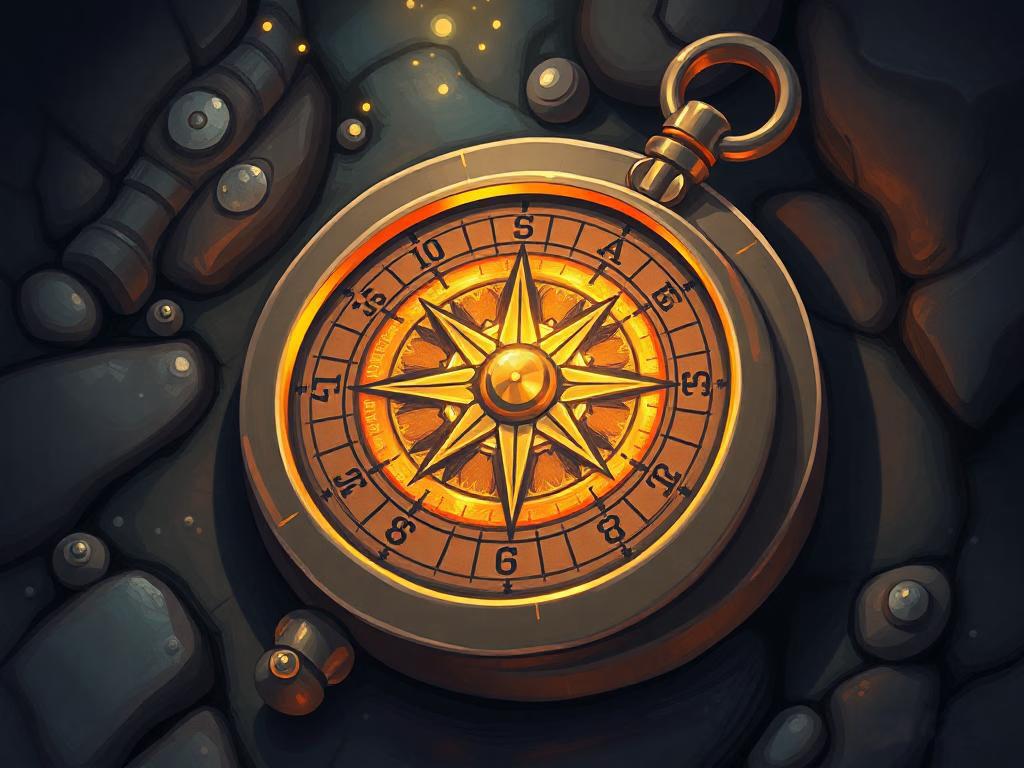
They opened the box together. Inside wasn’t gold or jewels. Instead, there were old black-and-white photographs protected by wax paper, a silver compass, and a thick stack of land titles.
“These papers…” Tok Wan’s voice trembled. “We thought they were lost when the boat sank. This land—the beach, the grove—it was always meant to be a sanctuary for the village fishermen. But without the deeds, the big developers have been trying to buy us out for years.”
Hana looked at a photo of a young man standing proudly on a wooden boat. He had the same mischievous glint in his eyes that she saw in her own mirror.
“He didn’t lose them in the storm,” Hana realized. “He hid them here so they wouldn’t be taken if the ship went down.”
“He was protecting our home,” Tok Wan said, a tear rolling down his cheek. “And you brought the secret back from the tide.”
The Echo of the Sea
The news spread through the village like wildfire. With the original deeds found, the “Desaru Heritage Project” was born. The community worked together to ensure the beach stayed public and the old traditions were preserved.
Hana still goes to the beach every day. She doesn’t look for bottles anymore. She sits by the hibiscus bush, listening to the waves. She realized that the “treasure” wasn’t something you could spend at a shop. It was the feeling of knowing who you are and where you came from.
Sometimes, when the wind blows just right, it smells like salt and hibiscus. And Hana just smiles, knowing that the sea really does keep things safe—until the right person comes to find them.
Share this story, Spread the joy or reading
Other Interesting Stories:
The Secret Map of Crispy Woods The sun was just peeking over the horizon, casting a warm glow on the dewy grass of Crispy Woods. Eddy sat cross-legged in his room, surrounded by an ocean of…
Voices of the Neon Bloom The air hung thick and humid, saturated with the scent of ozone and caramelized sugar. Kai traced the condensation on his chilled synth-ale, the neon glow of the 'Floating Lotus'…
The Lost Island of Mochi Creatures Eddy had always been a dreamer, the kind of guy who saw the world through a lens of whimsy. He stood on the edge of the dock, arms wide open…
The Snow Monkey’s Gift During a fierce blizzard in Japan’s Jigokudani Valley, twelve-year-old Renji Sato becomes stranded while trying to photograph snow monkeys for a contest. Shivering and alone, he’s unexpectedly welcomed into the…
The Enchanted Compass: A Treasure Hunt Beyond Time The sun dipped below the horizon, casting long shadows across the ancient stone courtyard of the old manor house. Ivy clung to the weathered walls, and a chill whispered through…
Journey to the Forgotten Land The forest loomed overhead, a tangle of twisted branches and thick foliage that seemed to swallow the light. Anna paused, brushing a strand of hair from her face, her heart…
This mode enables people with epilepsy to use the website safely by eliminating the risk of seizures that result from flashing or blinking animations and risky color combinations.
Visually Impaired Mode
Improves website's visuals
This mode adjusts the website for the convenience of users with visual impairments such as Degrading Eyesight, Tunnel Vision, Cataract, Glaucoma, and others.
Cognitive Disability Mode
Helps to focus on specific content
This mode provides different assistive options to help users with cognitive impairments such as Dyslexia, Autism, CVA, and others, to focus on the essential elements of the website more easily.
ADHD Friendly Mode
Reduces distractions and improve focus
This mode helps users with ADHD and Neurodevelopmental disorders to read, browse, and focus on the main website elements more easily while significantly reducing distractions.
Blindness Mode
Allows using the site with your screen-reader
This mode configures the website to be compatible with screen-readers such as JAWS, NVDA, VoiceOver, and TalkBack. A screen-reader is software for blind users that is installed on a computer and smartphone, and websites must be compatible with it.