Chapter 1: The Thing in Her Chest
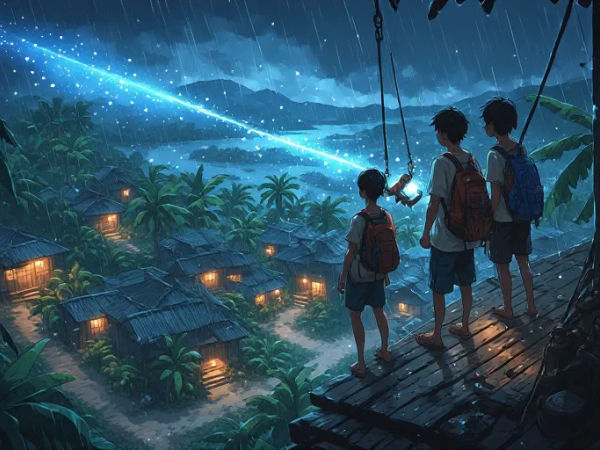
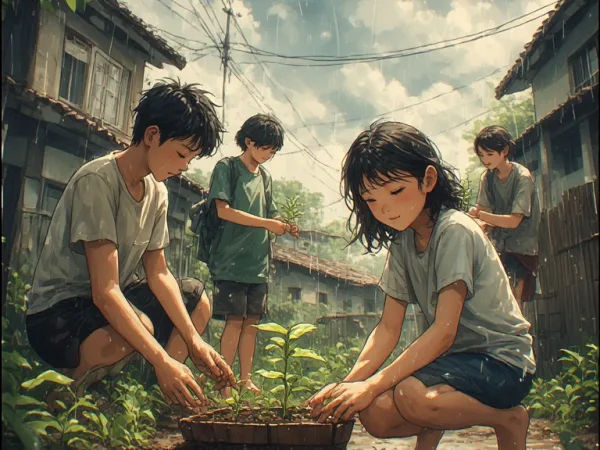
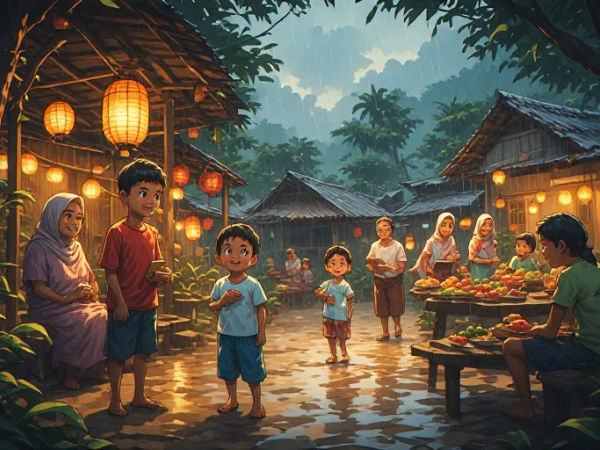
Kampung Empat was the kind of village where mornings arrived before the sun fully stretched its arms. Roosters didn’t just crow there—they argued with each other across rooftops. Motorbikes coughed awake along narrow lanes. And somewhere near the edge of the paddy fields, a breeze always seemed to carry the smell of wet earth and old rain, like the land itself was remembering things.
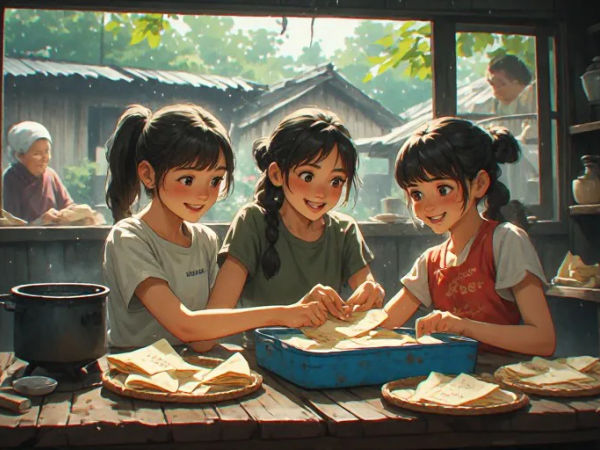
In a small wooden house with faded blue window frames lived an eleven-year-old girl named Liyana. Everyone called her Yana, except her grandmother, who insisted on calling her “Anak Kecil Berfikir Terlalu Banyak”—the little girl who thinks too much.
Yana didn’t argue with that. Because honestly… she did.
But what nobody else knew was this: Yana carried something heavy inside her chest. Not sickness. Not pain like a bruise. Something stranger. Something that felt like a stone made of gray silence. And she called it—without telling anyone—her Paperweight Heart.
It always began the same way. On normal days, Yana felt light. She could run after chickens, laugh too loudly in class, or race her best friend Mira down the dusty road after school. But when things got too much—too loud, too fast, too confusing—the stone appeared. It would settle right behind her ribs. Not visible, not touchable, but very, very real. It felt like someone had pressed a wet stone into her chest and told her, “Don’t move too much now.”
The first time it happened, she was eight, during a school assembly when she forgot her poem. Since then, it came back whenever she faced too many eyes, too many expectations, or too many feelings at once. “Paperweight Heart,” she whispered once in bed. “Because it keeps me down. Keeps me still.” And for a long time… she believed that was all it did.
Chapter 2: The Day Everything Felt Too Heavy
It started with a letter. A simple cream-colored envelope delivered to her classroom.
“Inter-School Storytelling Competition,” the teacher announced proudly. “Representing our school will be Yana.”
The classroom clapped. Mira nudged her. “Wah, Yana! You can do it lah!”
But Yana didn’t feel proud. She felt it. That familiar cold sinking in her chest. The stone was back, louder this time.
That night, she couldn’t sleep. The wooden ceiling above her bed creaked as the wind passed through, and crickets screamed like tiny violins outside. Yana stared at the fan spinning slowly above her. “What if I forget again?” she whispered. The stone pressed harder, as if answering.
The next morning, Yana made a decision. “If it’s a stone,” she muttered, “then I can throw it away.” She walked behind her house, past the banana trees and the broken wheelbarrow, holding her chest tightly. “Okay,” she said. “Go away now.” She tried to imagine pulling it out, but nothing happened. Frustrated, she picked up a real stone from the ground and threw it into the bushes. “There. I threw you away.” She waited, but nothing changed, except the stone inside her chest felt even heavier now, like it was offended.
Mira had another idea the next day while eating iced jelly at the roadside stall. “If something is stuck in you, you must wash it away. My cousin says water fixes everything.” So Yana went to the river behind the village, a slow and brownish-green stream curving through mangroves. She stood at the edge, dipped her hands into the cold water, splashed her face, and whispered, “I’m washing you away.” She stayed there until her clothes were damp and her legs were tired, but when she walked home, the stone was still there—worse now, heavier, like it had laughed at her attempt.
Chapter 3: The Old Shop at the Corner
The next encounter happened by accident. There was a small shop near the bus stop that nobody paid much attention to. It sold old books, paper fans, second-hand toys, and things that looked like they had stories attached to them. Yana only went there because it was raining heavily, and she needed shelter.
Inside, it smelled like paper and wood and something faintly sweet. An old woman sat behind the counter, not looking up immediately. “You look like you’re carrying something too heavy for your size,” the woman said casually.
Yana froze. “…I didn’t say anything,” she replied.
The woman smiled. “You don’t have to.”
That made Yana uncomfortable. People weren’t supposed to see things like that. The woman stood up, walked to a shelf, and placed a small, smooth stone on the counter. Unlike the one in Yana’s chest, this one had patterns carved into it, like waves.
“This is a paperweight,” the woman said.
Yana blinked. “Paper what?”
“Paperweight. It keeps paper from flying away when wind gets too strong.”
Yana frowned. “Why would paper need to be held down?”
The woman chuckled softly. “Because paper gets overwhelmed too. Just like people.”
Yana didn’t like that answer. It sounded too simple. She touched her chest slightly, feeling the stone inside shift and pay attention. That night, she couldn’t stop thinking about the shop. The stone was quieter now, just waiting, but the memory of the woman’s calm voice lingered: “You don’t have to carry it alone.”
Chapter 4: The Storm Day
The day of the competition arrived with heavy skies. The school hall buzzed with nervous energy as students from different schools whispered, rehearsed, and panicked. Yana sat backstage, holding her printed speech, her hands trembling. Mira squeezed her shoulder. “You got this, lah. Just imagine no one there.”
Yana nodded. But the moment the announcer called her name—the stone hit full force. Not gentle, not quiet. It crashed into her chest like a wave. She walked onto the stage. Lights too bright. Silence too loud. Microphone too close. Her mind emptied. She opened her mouth, but nothing came out. The audience blurred, her heartbeat became thunder, and she forgot her first line, then her second. A long, agonizing pause stretched out. Somewhere in the audience, someone coughed, breaking something inside her. Panic rose, and for the first time, the stone felt like it was winning.
Yana wanted to run and disappear into the floorboards. Her vision tightened, her breath disappeared. And then—she remembered the paperweight from the shop. “Just keeps paper from flying away…”
Her hands tightened around the microphone. The stone inside her chest didn’t vanish, but it shifted, feeling present rather than attacking. Yana whispered, barely audible: “Okay.” One breath in, one breath out. The stone stayed, but it didn’t grow. Another breath in, and out. She looked at the audience—not all at once, just the first row where Mira nodded gently.
Yana tried again. “This… is a story,” she began. Her voice shook, but it existed. And that was enough.
Chapter 5: Learning to Carry the Sky
Yana didn’t remember every word she said on stage, but she remembered the feeling. Not of the stone disappearing, but of it becoming less sharp. Like it was no longer crushing her, just anchoring her. When she finished, the hall was quiet for a moment before a warm, rain-slowing applause erupted.
Outside the hall, the rain had stopped and the air smelled clean. Mira ran up first. “YOU DID IT!”
Yana smiled weakly. “I didn’t run away.”
Later that evening, she went back to the old shop. The woman was still there, arranging paper fans. “You came back,” she said.
Yana nodded. “I think… my stone is weird.”
The woman smiled. “All important stones are.”
“But it doesn’t go away.”
“It’s not meant to.” The woman placed a small paperweight in her hands. “When wind comes, paper doesn’t stop being paper. It just learns to stay still enough to not fly away.”
Days passed, then weeks. The stone never left, but Yana stopped fighting it. Before speaking in class or stepping into crowded places, she breathed and felt the rhythm of her pulse. Mira noticed the change. “You’re not freezing so much anymore.” Yana shrugged, realizing it wasn’t a curse, but something that kept her from floating away.
That night, Yana lay on her bed again as the ceiling fan turned slowly. The stone inside her chest rested like a familiar object on a table. Still there, but no longer scary.
Yana closed her eyes. “I don’t need to throw you away,” she whispered. The stone didn’t answer, but it didn’t need to. Because now she understood: even heavy things can be gentle teachers, even weight can mean safety, and even a Paperweight Heart can help a girl stand steady when life gets too loud.
The End…