Chapter 1: The Tin Under the Bed
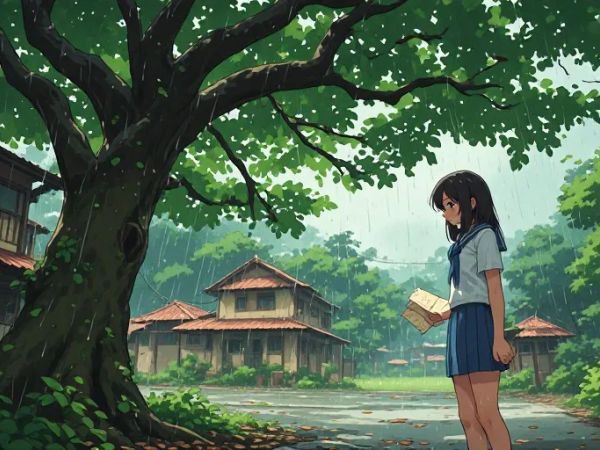
The first thing Cindy noticed that morning was that the rain had stopped.
The second thing she noticed was that the whole kampung smelled like wet earth, charcoal smoke, and freshly cooked coconut milk.
The third thing she noticed was that her little brother, Ah Meng, had stolen the crispy edge of her kuih kapit.
“Eh!” Cindy shouted.
Ah Meng froze halfway through chewing.
His eyes widened innocently.
“What?”
“That was mine!”
He swallowed.
“No, it wasn’t.”
“It was on my plate!”
“It was on the plate.”
“Our plate.”
“Then it belongs to everybody.”
Cindy stared at him.
Ah Meng grinned.
“You’re too slow, Kak Cindy.”
He ran.
“AH SENG!”
Cindy chased him through the wooden house, past their grandmother’s sewing basket and the little radio on the shelf, while their mother called from the kitchen.
“Don’t run inside! Someone will fall!”
“I won’t!”
“You always say that!”
Cindy jumped over a stool.
Ah Meng ducked behind their father.
Their father, who was sitting near the window repairing the handle of a bicycle basket, looked up slowly.
“What happened?”
“Ah Meng stole my kuih kapit!”
Their father looked at Ah Meng.
Ah Meng looked at Cindy.
Then their father sighed.
“Ah Meng.”
“Yes, Baba?”
“Give your sister another piece.”
“But—”
“Two pieces.”
Ah Meng’s mouth dropped open.
“Two?”
Cindy folded her arms triumphantly.
“Justice.”
Their father laughed.
Outside, the kampung was waking properly.
It was the middle of the 1970s, and the village seemed to have its own rhythm. Chickens scratched beneath houses raised on wooden posts. Bicycles leaned against fences. Someone down the road was sweeping fallen leaves with a long coconut-palm broom. From the small wooden bridge came the occasional squeak of bicycle wheels.
Cindy loved mornings like this.
She was thirteen, sharp-eyed, curious, and forever noticing things other people ignored.
A missing slipper.
A new scratch on the neighbour’s gate.
A footprint in the mud.
A bird feather caught in a fence.
Her grandmother called her Mata Helang—eagle eyes.
Cindy secretly liked the nickname.
One person, however, found it troublesome.
Her older cousin Mei Lan.
“You notice too much,” Mei Lan often complained.
“That isn’t a problem.”
“It is when you notice my secrets.”
“Then don’t leave your secrets lying around.”
That morning, Cindy’s eagle eyes noticed something else.
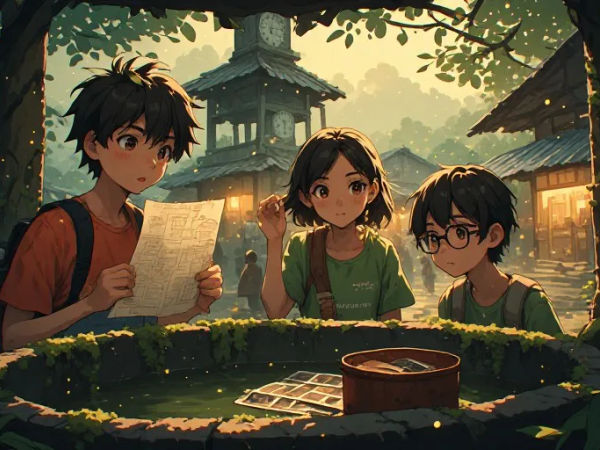
A small metal tin.
It was tucked beneath the old wooden bed in the spare room.
Cindy had never seen it before.
She crouched.
“Hmm.”
The tin was faded blue, with a dent in one corner. A rusty latch held it shut.
Cindy pulled it out.
Dust covered the lid.
She wiped it with her sleeve.
There were words scratched into the metal.
FOR THE KUIH KAPIT.
Cindy blinked.
“What?”
She opened the tin.
Inside was a bundle of old paper.
Not money.
Not photographs.
Letters.
Dozens of them.
Their paper had turned yellow with age. Some were folded into tiny squares. Some were tied with faded red thread. A few had small circles drawn in pencil at the corners.
Cindy picked up the first one.
The handwriting was neat.
To the person who always leaves the sweetest thing behind…
Cindy’s eyebrows rose.
She opened another.
If you find this, don’t tell anyone yet.
Another:
The next letter is waiting where the kuih kapit cools.
Cindy stopped.
Her heart began beating faster.
This wasn’t an ordinary collection of old letters.
It was a mystery.
And Cindy loved mysteries.
She grabbed the tin.
Then she heard footsteps.
She quickly shoved it beneath her shirt.
Mei Lan appeared at the doorway.
“What are you doing?”
“Nothing.”
“You’re hiding something.”
“No.”
“You are.”
Cindy tried to walk past.
Mei Lan blocked her.
“Cindy.”
“Mei Lan.”
“What is that?”
“Nothing.”
Mei Lan narrowed her eyes.
Cindy narrowed hers.
For three seconds they stood silently.
Then Mei Lan whispered:
“Is it money?”
“No.”
“Ghost story?”
“No.”
“Secret recipe?”
“Maybe.”
Mei Lan’s eyes lit up.
“Aha!”
Cindy sighed.
“Fine. But you must promise not to tell Ah Meng.”
“Deal.”
They hurried into the kitchen.
And that was how the mystery of the kuih kapit love letters began.
Chapter 2: The Sweetest Thing Left Behind
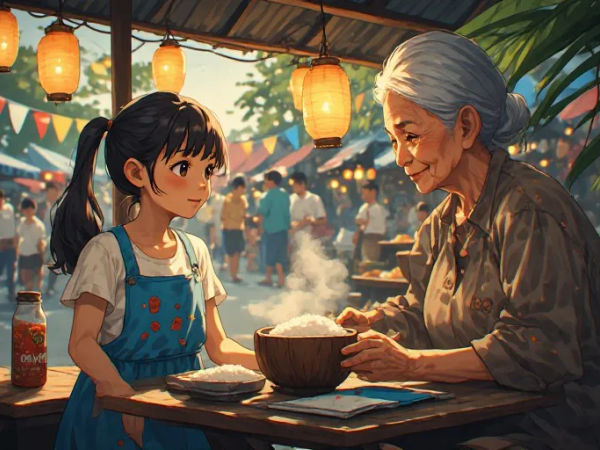
Their grandmother, Ah Ma, was making kuih kapit that afternoon.
The thin batter was poured onto an old iron mould.
She closed it.
The mould hissed over the charcoal fire.
Cindy and Mei Lan watched.
“Where did you learn to make these?” Cindy asked.
Ah Ma smiled.
“From my mother.”
“Did she use this mould?”
“Yes.”
“Was the mould always this old?”
Ah Ma laughed.
“Everything becomes old if you wait long enough.”
Mei Lan leaned closer.
“Ah Ma, did you ever hide letters inside the kuih kapit?”
The old woman’s hands stopped.
Only for a moment.
But Cindy saw it.
Her eagle eyes never missed anything.
Ah Ma looked at them.
“What makes you ask?”
Cindy exchanged a glance with Mei Lan.
Then she brought out the tin.
Ah Ma stared at it.
The kitchen became very quiet.
Even Ah Meng, who had been waiting for another crispy piece, stopped chewing.
“Where did you find that?”
“Under the bed in the spare room.”
Ah Ma slowly wiped her hands on her apron.
“That tin belonged to your grandfather.”
Cindy’s heart jumped.
“Baba’s father?”
Ah Ma nodded.
“He kept many things.”
“What are the letters about?”
Ah Ma didn’t answer immediately.
Instead, she opened the tin.
Her fingers touched the yellowed paper as gently as if it might break.
“I haven’t seen these for many years.”
“Are they love letters?” Cindy asked.
Ah Ma smiled.
“Yes.”
Cindy leaned forward.
“To you?”
Ah Ma laughed softly.
“Some of them.”
Mei Lan gasped.
“Really?”
“But not the kind you’re imagining.”
Cindy looked confused.
“What kind, then?”
Ah Ma picked up a letter.
“When people hear the words love letter, they think of two people writing sweet things to each other.”
She tapped the paper.
“But love can be much bigger than that.”
She unfolded the letter.
“This was written by your grandfather.”
Cindy read the first few lines.
It wasn’t romantic.
It was about the kampung.
The broken footbridge.
The children who walked to school.
The old widow who lived near the rambutan trees.
The family whose house had burned years ago.
The letter ended:
If we have enough, let us share. If we have little, let us still share.
Cindy looked up.
“That’s a love letter?”
Ah Ma nodded.
“Love for the people around us.”
She opened another.
That one was written by a woman Cindy didn’t recognize.
It described the smell of kuih kapit, the sound of rain on zinc roofs, and children laughing near the well.
Another letter talked about a boy who had lost his schoolbooks.
Another thanked someone for repairing a bicycle.
Another was from a child thanking an unknown person for leaving food outside her family’s house during a difficult month.
Cindy became fascinated.
But one letter was missing.
At the bottom of the tin, she found an empty space.
A small paper label was stuck there.
LETTER TWELVE — NEVER DELIVERED.
Cindy looked at Ah Ma.
“What happened to number twelve?”
Ah Ma’s smile disappeared.
“I don’t know.”
“You don’t?”
“No.”
“Who wrote it?”
“I don’t remember.”
“Who was it for?”
Ah Ma shook her head.
“That is the part I never discovered.”
Cindy’s heart began pounding again.
A missing letter.
An old secret.
A clue hidden somewhere in the kampung.
Perfect.
She turned to Mei Lan.
“We’re finding it.”
Mei Lan nodded.
Ah Ma sighed.
“Of course you are.”
Chapter 3: The Clues
Cindy spread the letters across the dining table that night.
Mei Lan sat beside her with a pencil.
Ah Meng sat opposite them eating peanuts.
“You’re not helping,” Cindy said.
“I know.”
“Then why are you here?”
“I want to be the detective assistant.”
“You’re eight.”
“Exactly. I’m cheap.”
Mei Lan burst out laughing.
Cindy tried not to.
“All right,” she said. “You can help.”
Ah Meng straightened proudly.
Cindy studied the letters.
Each contained small clues.
The first mentioned the place where the wind rings metal.
The second mentioned three stones beneath a crooked tree.
The third said:
When the afternoon shadow touches the old bridge, look down.
Mei Lan frowned.
“What place has metal that rings?”
“The bicycle repair shed?” Ah Meng suggested.
“Too easy.”
“The school bell?”
“No.”
Cindy thought.
Then she remembered.
Near the village entrance stood a tall bamboo frame with several old metal pieces hanging from it. Whenever the wind blew, they clanged together.
She grabbed her sandals.
“Come on.”
They ran.
The evening sun was turning orange when they reached the bamboo frame.
The metal pieces clinked softly.
Cindy searched beneath the wooden platform.
Nothing.
She checked behind a post.
Nothing.
Ah Meng pointed.
“Kak Cindy!”
He held up a small folded paper.
It had been wedged inside a bamboo joint.
Cindy opened it.
If you want to find the missing letter, don’t follow the road. Follow the shadow.
Mei Lan frowned.
“What does that mean?”
Cindy looked toward the bridge.
“The old bridge.”
They waited until late afternoon the next day.
When the sun lowered, the bridge cast a long shadow over the muddy bank.
Cindy climbed down carefully.
“Watch your step.”
“I am.”
She searched beneath the bridge.
Ah Meng searched too.
Mei Lan stood above.
“Anything?”
“Nothing!”
Then Cindy saw something.
A flat stone.
Beneath it was a tiny wooden box.
Her breath caught.
Inside was another note.
The letter was hidden where everyone looks but nobody sees.
Mei Lan groaned.
“That could be anywhere.”
Cindy looked around.
The kampung stretched before them.
Houses.
Trees.
The well.
The market stall.
The school.
The old sewing shed.
The kitchen where kuih kapit were made.
Then she smiled.
“Everyone looks at the kuih.”
Mei Lan blinked.
“But nobody looks at the mould.”
They raced home.
Chapter 4: The Old Iron Mould
Ah Ma was in the kitchen.
Cindy rushed toward her.
“Ah Ma!”
“What?”
“The kuih kapit mould.”
“What about it?”
“Can I see it?”
Ah Ma raised an eyebrow.
“You’re becoming more troublesome every day.”
She handed it over.
Cindy examined the iron handles.
Nothing.
She checked the wooden grip.
Nothing.
She turned it over.
Nothing.
Mei Lan pointed at the hinge.
“Look!”
A tiny piece of paper was trapped between the metal plates.
Cindy carefully pulled it out.
Her hands trembled.
The paper was much older than the others.
It had been folded many times.
She opened it.
Only one sentence was written inside.
The sweetest letters were never meant for one person.
Cindy stared.
“That doesn’t make sense.”
Ah Ma had gone very still.
She whispered:
“I remember.”
Cindy turned.
“What?”
Ah Ma sat down.
“I remember that sentence.”
She closed her eyes.
“Many years ago, after your grandfather passed away, I found him writing letters.”
“To you?”
“Yes.”
“What did they say?”
Ah Ma smiled.
“He wrote about ordinary things. About the weather. About the children. About how expensive rice had become. About the neighbour’s broken fence.”
She laughed softly.
“He wasn’t good at writing romantic words.”
Cindy smiled.
“Then why were they called love letters?”
“Because he said love should not only be spoken to one person.”
Ah Ma reached into a cupboard.
She took out an old photograph.
Cindy looked at it.
There was her grandfather, younger than she had ever known him, standing beside a table covered with kuih kapit.
Around him were many villagers.
Children.
Grandparents.
Families.
Everyone was smiling.
“What happened here?” Cindy asked.
Ah Ma looked at the photograph.
“That was the day the letters were finally delivered.”
“All of them?”
“Almost.”
“Except number twelve.”
Ah Ma nodded.
“Number twelve was meant for someone who never came.”
“Who?”
Ah Ma’s eyes grew sad.
“I don’t know.”
Cindy studied the photograph.
Then she noticed something.
At the edge of the picture stood a girl.
She was holding a small woven basket.
Cindy pointed.
“Who is that?”
Ah Ma looked.
Her expression changed.
“That…”
She took the photograph closer.
“That is Mei Siew.”
“Who was she?”
“She lived near the rubber trees. Her family moved away suddenly.”
“Why?”
“I don’t know.”
Cindy looked at the photograph again.
The girl was holding something.
A tiny metal tin.
Just like the one beneath the bed.
Cindy stood.
“Ah Ma.”
“Yes?”
“I think Letter Twelve wasn’t lost.”
Ah Ma looked at her.
“I think someone took it.”
Chapter 5: The House at the Edge of the Kampung
Cindy, Mei Lan, and Ah Meng followed the old path toward the abandoned house near the rubber trees.
The afternoon air was hot and thick.
Cicadas buzzed in the trees.
A lizard darted across the path.
Ah Meng whispered, “Are we going into a haunted house?”
“No.”
“Are you sure?”
“No.”
“That’s not comforting.”
The house had been empty for years.
Its wooden walls were grey with age.
Vines curled around the steps.
Cindy pushed open the door.
It groaned.
Inside smelled of dust and dried leaves.
Sunlight entered through gaps in the walls.
They searched room by room.
Nothing.
Then Mei Lan noticed a loose floorboard.
“Cindy.”
They lifted it.
Beneath it was a small cloth bundle.
Cindy opened it.
Inside was a metal tin.
Her hands went cold.
She opened the tin.
There was only one thing inside.
A letter.
LETTER TWELVE.
Cindy almost shouted.
“We found it!”
Ah Meng danced.
“We found it! We found it!”
But Cindy didn’t open it.
Something about the letter felt important.
She carefully unfolded it.
The handwriting was unfamiliar.
To the people of this kampung,
If you are reading this, then perhaps I am already far away.
I wanted to thank you.
When my family had almost nothing, people here helped us without asking for anything in return.
Someone fixed my father’s bicycle.
Someone left vegetables at our door.
Someone gave my little brother books.
Someone taught me how to make kuih kapit.
I used to think love meant saying big things.
Now I know it can be quiet.
It can be a bowl of rice.
A repaired roof.
A hand on your shoulder.
A person remembering your name.
I am leaving soon, but I hope this letter stays.
If you find it one day, please pass it around.
Let everybody read it.
Because everybody deserves to know when they have been loved.
Cindy’s eyes stung.
Mei Lan wiped her cheek.
Ah Meng was unusually quiet.
Then he said, “Who kept it?”
Cindy looked around.
On the wall was a faint pencil drawing.
A girl.
A basket.
A kuih kapit mould.
And underneath, a single word:
THANK YOU.
Cindy suddenly understood.
“Mei Siew didn’t steal the letter.”
“She kept it,” Mei Lan said.
“Why?”
“Maybe because she couldn’t say goodbye.”
They carried the letter home.
But the mystery wasn’t finished.
Because when Cindy showed it to Ah Ma, the old woman began to cry.
Chapter 6: Ah Ma’s Secret
“I remember now,” Ah Ma said.
Everyone gathered around her.
“Mei Siew came to me the night before her family left.”
She touched the letter.
“She asked me to keep it.”
“Why didn’t you?”
“I tried.”
Ah Ma sighed.
“But your grandfather wanted to put all the letters together. We were preparing them for the village gathering.”
“What happened?”
“Mei Siew changed her mind.”
“Why?”
“She was embarrassed.”
Cindy frowned.
“Embarrassed?”
“She thought people would laugh at her writing.”
Cindy looked at the letter.
“But it’s beautiful.”
“I told her that.”
Ah Ma smiled sadly.
“She didn’t believe me.”
“So she hid it?”
“Yes.”
“And then her family left.”
Ah Ma nodded.
“Your grandfather spent years wondering what happened to Letter Twelve.”
Cindy looked at the photograph.
“He never knew.”
“No.”
She was silent.
Then Ah Ma said something that surprised Cindy.
“Perhaps you should finish what we started.”
“What?”
“The letters.”
Chapter 7: The Kuih Kapit Gathering
The next morning, Cindy had an idea.
She gathered Mei Lan and Ah Meng.
“We’re making new love letters.”
Ah Meng blinked.
“To who?”
“Everyone.”
They wrote letters.
Not fancy ones.
Not perfect ones.
Just honest ones.
Cindy wrote:
Thank you to the person who fixes the village bicycles even when nobody remembers to say thanks.
Mei Lan wrote:
Thank you to the auntie who always gives extra vegetables to children.
Ah Meng wrote:
Thank you to Kak Cindy for letting me be detective assistant even though I am very handsome.
Cindy crossed it out.
“No.”
“Why?”
“Because that’s not gratitude.”
“Fine.”
He thought.
Then wrote:
Thank you, Kak Cindy, for always waiting for me when I walk home.
Cindy looked at him.
She smiled.
“That’s better.”
They invited everyone to the house that evening.
The yard filled with folding chairs.
Children ran between the trees.
Adults chatted.
Ah Ma made tray after tray of kuih kapit.
The smell of toasted coconut and sugar drifted through the air.
When everyone had arrived, Cindy stood up.
She was nervous.
Her hands shook.
But she remembered Mei Siew’s letter.
She took a deep breath.
“I found something old.”
She held up Letter Twelve.
Everyone became quiet.
Cindy read it aloud.
When she finished, nobody spoke for several seconds.
Then an old bicycle repairman raised his hand.
“I remember Mei Siew.”
A woman near the doorway smiled.
“She used to chase chickens.”
Someone laughed.
Another person said, “She was very shy.”
Ah Ma wiped her eyes.
“She was brave enough to write this.”
Cindy nodded.
Then she placed a basket in the middle of the yard.
“Tonight, everyone can write one letter.”
“Who are they for?” someone asked.
“Anyone.”
A father wrote to his daughter.
A child wrote to his grandmother.
A neighbour wrote to the bicycle repairman.
Ah Ma wrote to her late husband.
She folded the paper slowly.
Then she placed it in the basket.
Cindy noticed something beautiful.
Nobody was laughing.
Nobody thought the letters were silly.
They were simply writing.
Because sometimes the biggest feelings were the hardest ones to say aloud.
Chapter 8: A Letter From Far Away
Three weeks later, a letter arrived.
It came from another town.
The envelope was addressed to:
THE PEOPLE WHO MAKE KUIH KAPIT WITH KINDNESS
Cindy knew immediately.
Mei Siew.
Her family had somehow heard about the gathering.
Cindy opened the letter with Ah Ma beside her.
I thought my letter was forgotten.
I was wrong.
Thank you for finding it.
I still remember the kampung.
I remember the bridge.
I remember the sound of rain.
I remember the smell of kuih kapit.
Most of all, I remember people helping us when they didn’t have much themselves.
I hope you continue the letters.
Some things should never disappear.
At the bottom was a small drawing.
A kuih kapit.
Cindy laughed.
Ah Ma laughed too.
Ah Meng immediately asked, “Does that mean we get more kuih kapit?”
“That’s what you got from the whole letter?”
“Yes.”
Cindy shook her head.
“Impossible.”
Chapter 9: What Cindy Learned
Years later, Cindy would still remember that summer.
She would forget the exact number of letters.
She would forget some of the clues.
She would even forget where the old blue tin finally went.
But she would remember the lesson.
Love wasn’t always dramatic.
It didn’t always arrive with flowers or grand speeches.
Sometimes it appeared in small things.
A bicycle repaired before sunrise.
A plate of food left quietly at a doorstep.
A schoolbook passed from one child to another.
A grandmother teaching a girl how to make kuih kapit.
A brother waiting at the roadside.
A letter hidden beneath a floorboard because someone was too shy to say what was in her heart.
And sometimes love was simply remembering.
Remembering who helped you.
Remembering who stood beside you.
Remembering the people who made an ordinary place feel like home.
One evening, Cindy sat beneath the old rambutan tree with the blue tin beside her.
She opened it.
The original letters were there.
So were the new ones.
Dozens of them.
Some were written beautifully.
Some were crooked.
Some had spelling mistakes.
Ah Meng’s latest letter had a large drawing of himself wearing a detective hat.
Cindy smiled.
She added one more letter.
She folded it carefully.
Then she placed it inside the tin.
Mei Lan looked over her shoulder.
“What did you write?”
Cindy closed the lid.
“It’s a secret.”
“Come on.”
“No.”
“Just one line.”
Cindy shook her head.
Then she smiled.
“All right.”
She opened the tin and showed her cousin.
The letter said:
Dear future me,
If you ever forget what matters, remember the kampung after rain.
Remember the people.
Remember the kuih kapit.
And remember that the sweetest things are often the ones people give without expecting anything back.
Mei Lan read it twice.
Then she nodded.
“That is a proper love letter.”
Cindy smiled.
Above them, the evening wind moved through the trees.
Somewhere in the distance, a bicycle bell rang.
From the kitchen came Ah Ma’s familiar voice.
“Cindy! Come and help with the kuih kapit!”
Cindy stood.
“Coming!”
Ah Meng shouted from the house.
“Save me some!”
“You already ate ten!”
“Those were practice!”
Cindy laughed.
She ran home.
Behind her, the old blue tin rested safely beneath the rambutan tree for a few more minutes, filled with yellowed paper, new memories, and the quiet proof that kindness could travel farther than anyone imagined.
And in the warm little kampung where everyone seemed to know everyone else’s business, one secret remained worth keeping:
The sweetest love letters were never written for one person.
They were written for everyone who needed to know they mattered.
The End…